
In 1847, Henry Wadsworth Longfellow published his poem Evangeline: A Tale of Acadie, a fi ct ional tale of Evangeline and Gabriel, lovers separated during the Acadian deportation.
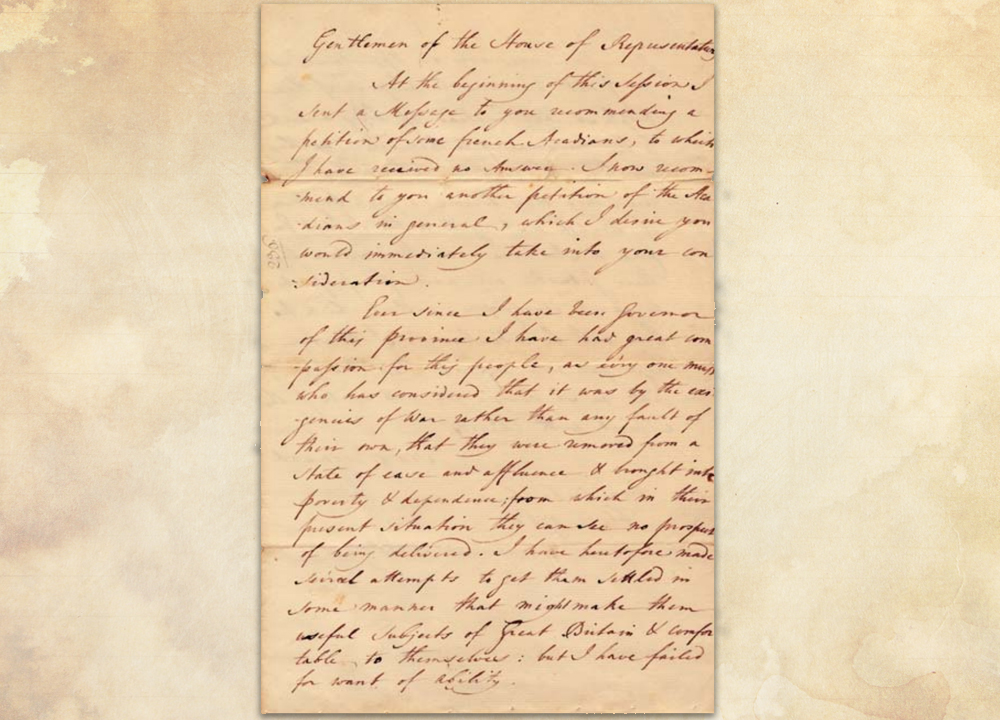
Address of Governor Bernard to the House of Representatives, February 13, 1766
(page 1 of 2)
Forwarding several Acadian petitions to the House of Representatives, Governor Bernard advised that permission be granted and funds allowed for the transport of Acadians to Quebec, believing them to be industrious British subjects, temporarily disadvantaged by circumstance.
- Massachusetts Archives
(page 1 of 2)
Forwarding several Acadian petitions to the House of Representatives, Governor Bernard advised that permission be granted and funds allowed for the transport of Acadians to Quebec, believing them to be industrious British subjects, temporarily disadvantaged by circumstance.
- Massachusetts Archives
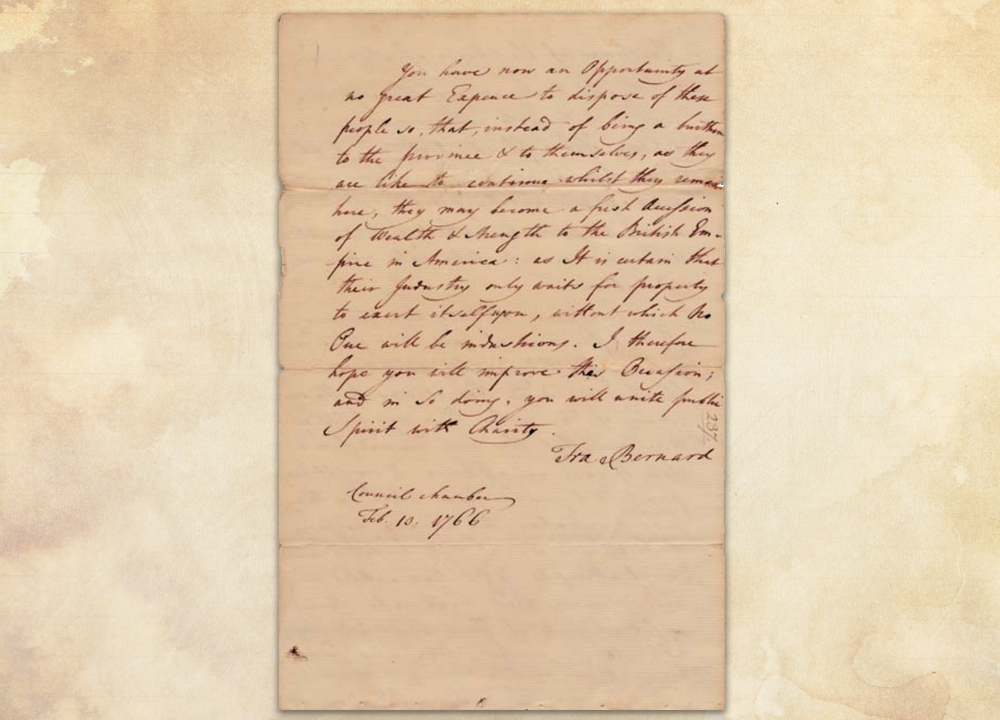
Address of Governor Bernard to the House of Representatives,
February 13, 1766
(page 2 of 2)
Forwarding several Acadian petitions to the House of Representatives, Governor Bernard advised that permission be granted and funds allowed for the transport of Acadians to Quebec, believing them to be industrious British subjects, temporarily disadvantaged by circumstance.
- Massachusetts Archives
(page 2 of 2)
Forwarding several Acadian petitions to the House of Representatives, Governor Bernard advised that permission be granted and funds allowed for the transport of Acadians to Quebec, believing them to be industrious British subjects, temporarily disadvantaged by circumstance.
- Massachusetts Archives
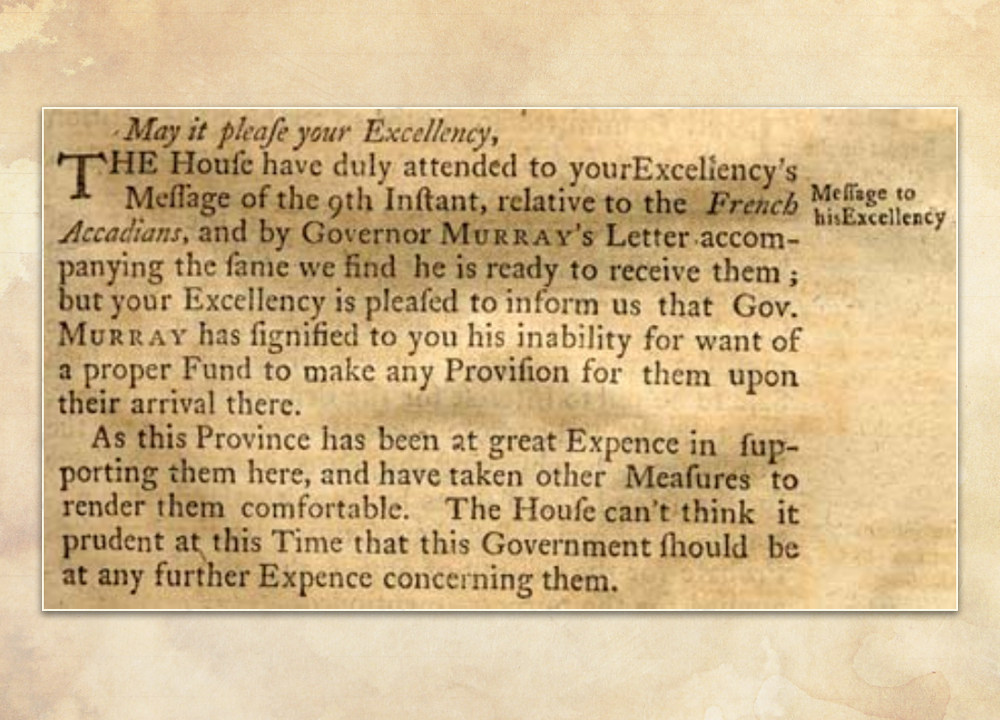
Message of the House of Representatives to
Governor Bernard, June 26, 1766
After consideration of additional request s by the Acadians for support during their proposed attempts at resettlement in Quebec, the House of Representatives denied them further aid. As a result, Acadians left for Quebec in small groups.
- Massachusetts Archives
After consideration of additional request s by the Acadians for support during their proposed attempts at resettlement in Quebec, the House of Representatives denied them further aid. As a result, Acadians left for Quebec in small groups.
- Massachusetts Archives
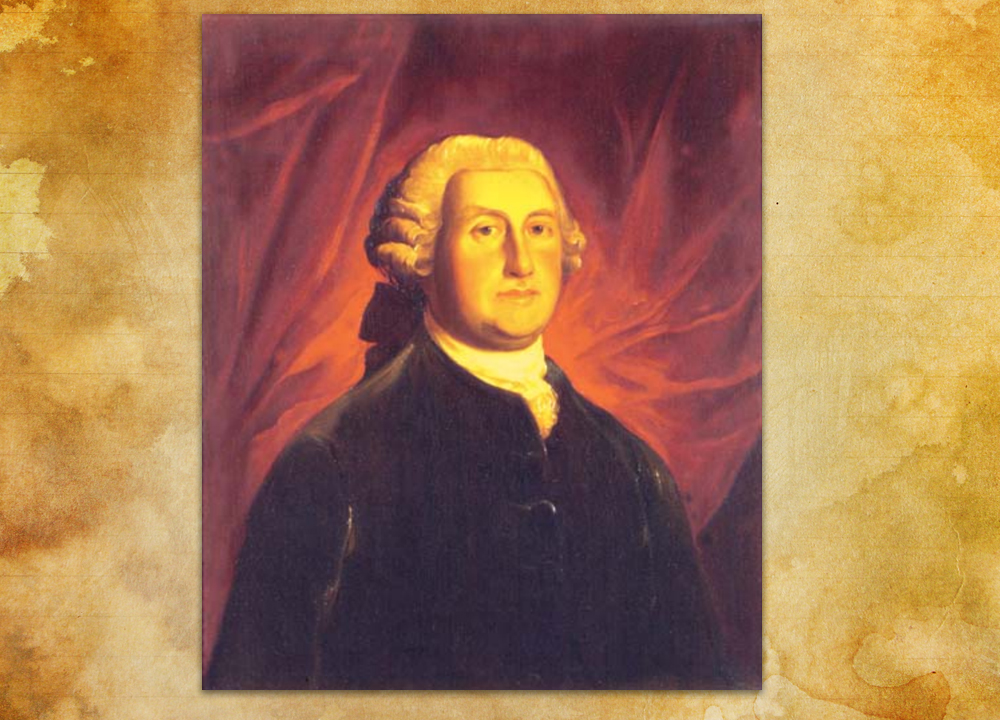
Francis Bernard, Governor of Massachusetts (1760-1769), portrait by
Giovanni Battist a Troccoli, 1925
Following the signing of the Treaty of Paris (1763), Governor Bernard found himself having to deal with the matter of the Acadians wishing to leave the province and return home, settle in the French colonies, or settle in the newlyest ablished British colony of Quebec.
- Courtesy of the Commonwealth of Massachusetts Art Commission
Following the signing of the Treaty of Paris (1763), Governor Bernard found himself having to deal with the matter of the Acadians wishing to leave the province and return home, settle in the French colonies, or settle in the newlyest ablished British colony of Quebec.
- Courtesy of the Commonwealth of Massachusetts Art Commission
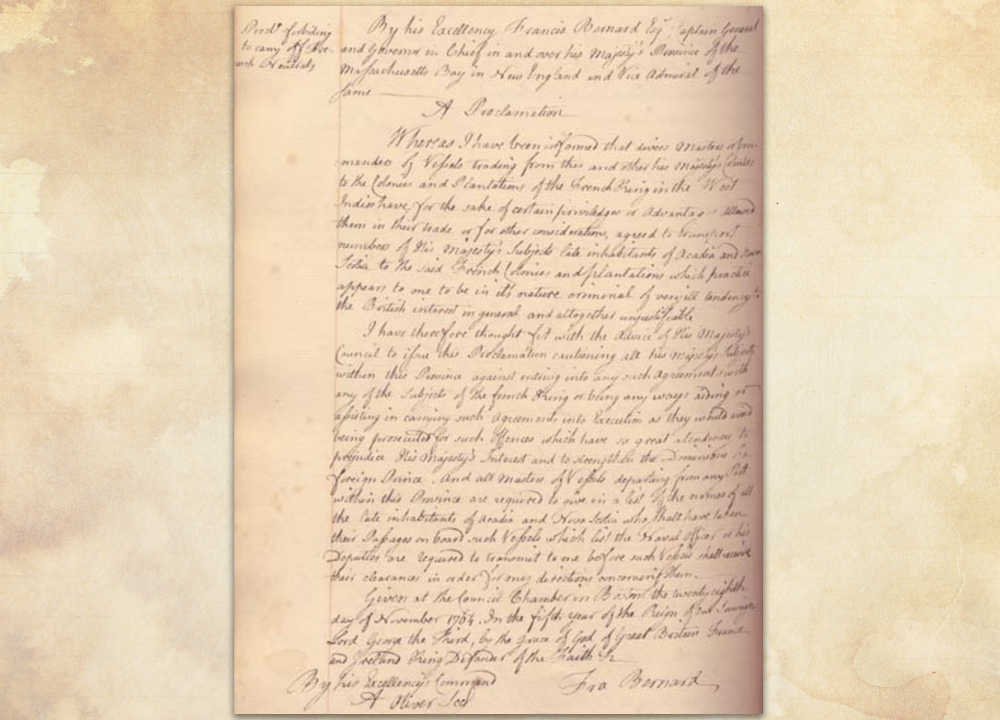
Proclamation of Governor Francis Bernard,
November 28, 1764
Faced with the request s of nearly one thousand Acadians and their attempts to relocate to the French colony of St. Domingue (Haiti), Governor Bernard found it necessary to issue this proclamation forbidding their transport, claiming that it would tend to “st rengthen the dominion of a foreign prince.”
- Massachusetts Archives
Faced with the request s of nearly one thousand Acadians and their attempts to relocate to the French colony of St. Domingue (Haiti), Governor Bernard found it necessary to issue this proclamation forbidding their transport, claiming that it would tend to “st rengthen the dominion of a foreign prince.”
- Massachusetts Archives
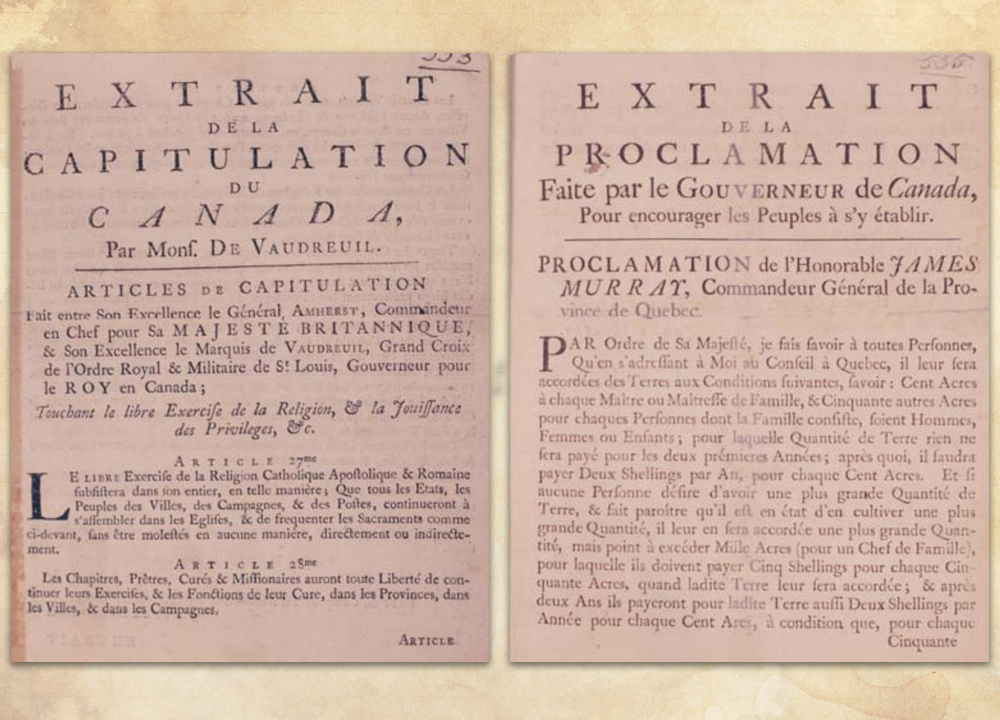
Circular containing the Articles of Capitulation and the Proclamation of Governor James Murray,
1766
This circular, published in French, details several articles agreed upon by French governor Pierre de Rigaud upon the surrender of Quebec, guaranteeing former French subjects freedom to practice the Roman Catholic faith. Newly appointed British governor James Murray promised land to persons of French origin wishing to settle in Quebec, a very appealing proposal to displaced Acadians.
- Massachusetts Archives
This circular, published in French, details several articles agreed upon by French governor Pierre de Rigaud upon the surrender of Quebec, guaranteeing former French subjects freedom to practice the Roman Catholic faith. Newly appointed British governor James Murray promised land to persons of French origin wishing to settle in Quebec, a very appealing proposal to displaced Acadians.
- Massachusetts Archives
TEXT ONLY
Massachusetts recruited three African-American regiments during the Civil War, the 54th, 55th, and 5th Cavalry. News that black soldiers could not be offi cers led to divisions within the black community. Some opposed recruitment. “Equality fi rst, guns afterward” was the sentiment voiced by William Wells Brown. Robert Morris agreed and argued against enlistment. William Cooper Nell was discouraged by the ban but thought the historical opportunity should not be missed. Similar concerns arose over the issue of equal pay