
The weight of English settlement and the appetite for land led to two wars and shocking atrocities against Native people.
- Courtesy of Oberlin College Archives
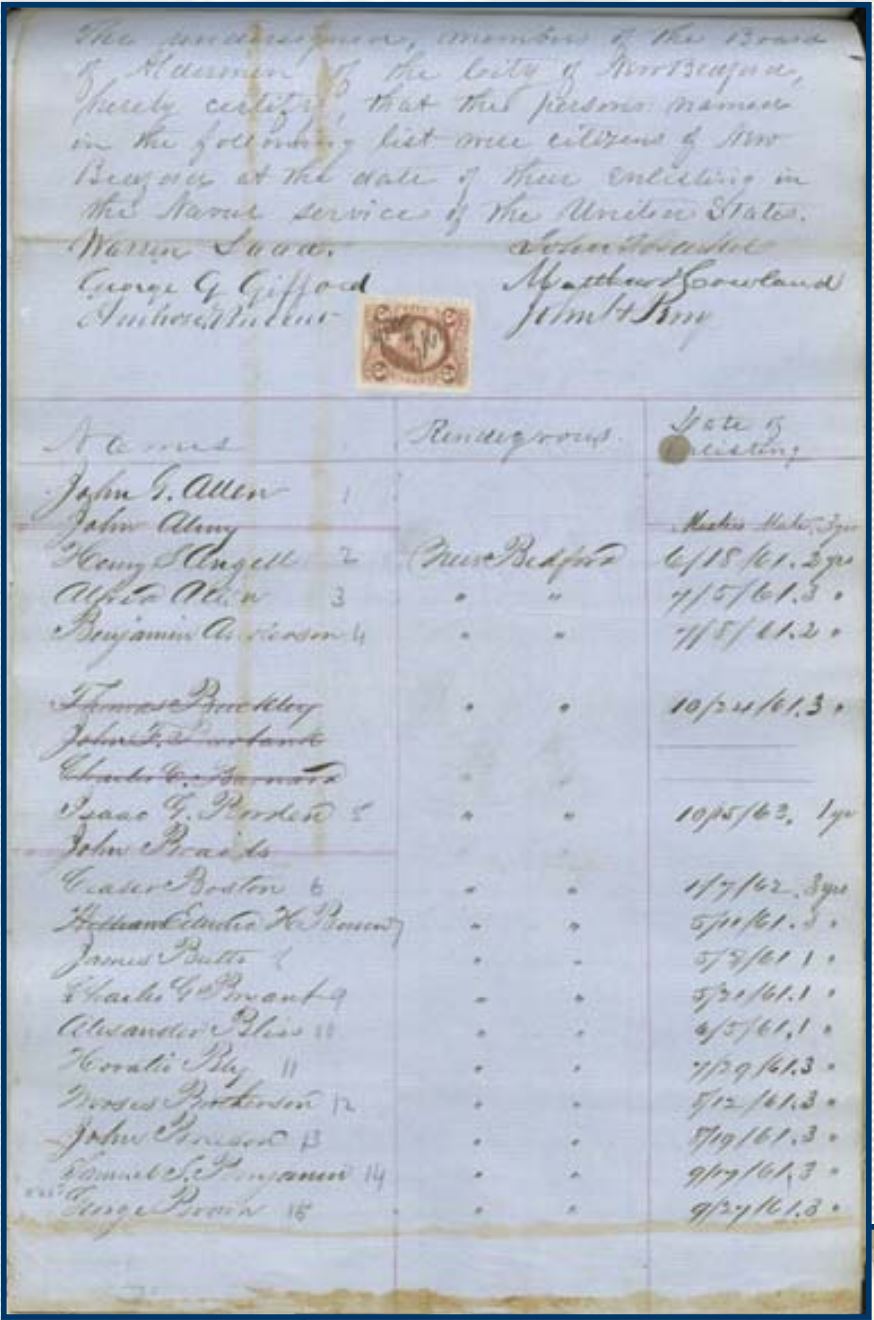
A Congressional act of July 4, 1864 allowed states to receive retroact ive recruiting credit for their sailors enlisted since the beginning of the war. Th is selection from a certifi ed list of sailors submitt ed by New Bedford’s aldermen includes the names of two black sailors, Benjamin Anderson and Caesar Boston.
Massachusetts Archives
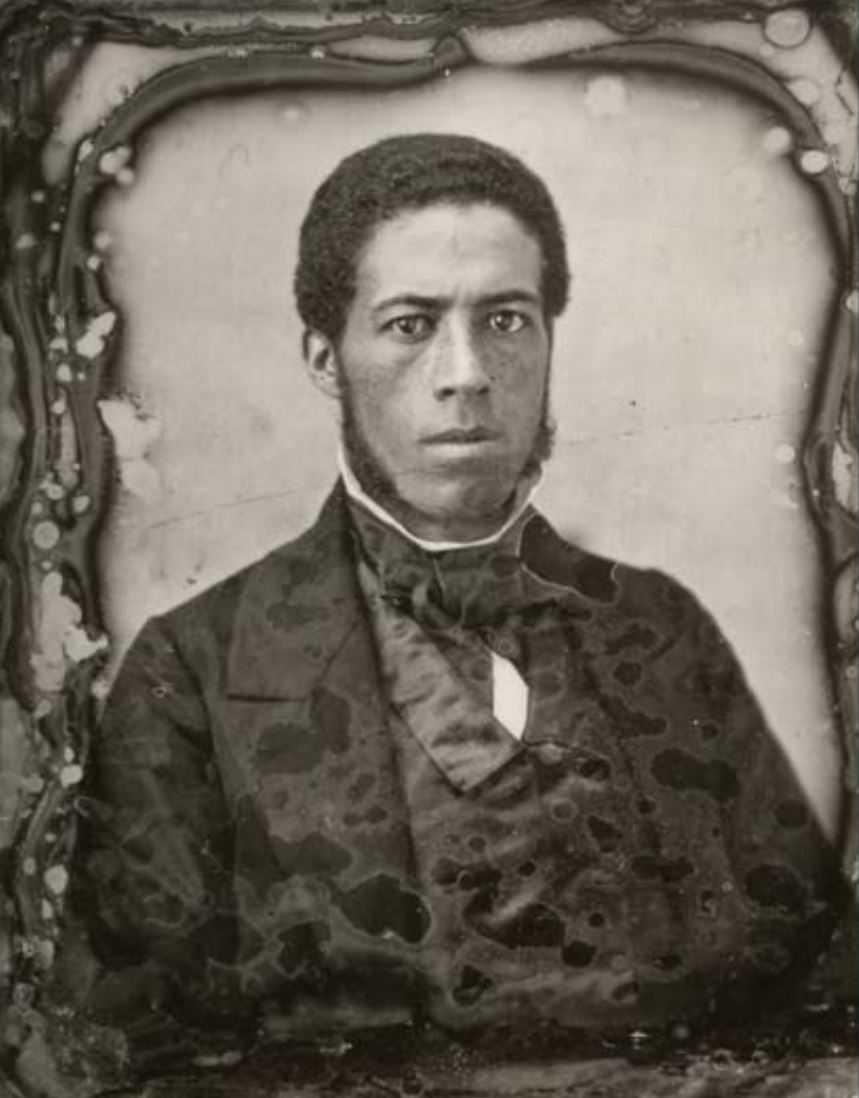
John Mercer Langston
John Mercer Langston, an Oberlin College graduate and the first black lawyer in Ohio, was the western recruiting agent for the Massachusetts 54th and 55th regiments.
- Massachusetts Archives
This newspaper clipping describes the presentation of fl ags to the 55th Massachusetts Infantry before it left for the front. Aft er the war, the fl ags donated by the African-American women of Ohio were given to Governor Andrew. Th e national and state fl ags were returned to the Massachusetts State House, where they are kept to this day.
Massachusetts Archives
Detail of “Presentation of Colors to the Fifty-fifth Regiment” This newspaper clipping describes the presentation of flags to the 55th Massachusetts Infantry before it left for the front. After the war, the flags donated by the African-American women of Ohio were given to Governor Andrew. The national and state flags were returned to the Massachusetts State House, where they are kept to this day.
- Massachusetts Archives
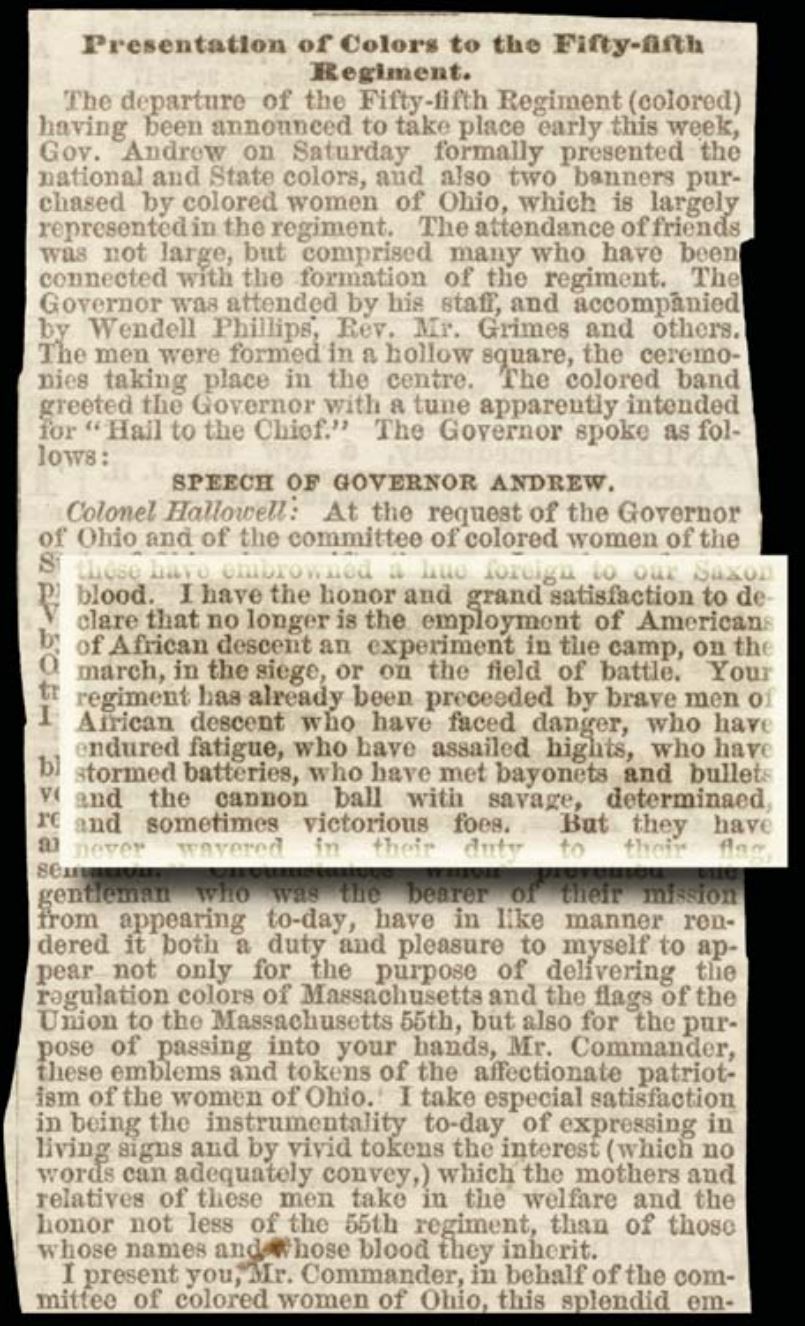
This newspaper clipping describes the presentation of fl ags to the 55th Massachusetts Infantry before it left for the front. Aft er the war, the fl ags donated by the African-American women of Ohio were given to Governor Andrew. Th e national and state fl ags were returned to the Massachusetts State House, where they are kept to this day.
Massachusetts Archives
Detail of “Presentation of Colors to the Fifty-fifth Regiment” This newspaper clipping describes the presentation of flags to the 55th Massachusetts Infantry before it left for the front. After the war, the flags donated by the African-American women of Ohio were given to Governor Andrew. The national and state flags were returned to the Massachusetts State House, where they are kept to this day.
- Public Domain Review
- Graphics Fairy
- Blandon Campbell
- Massachusetts Archives

Cranberries
Today Massachusetts is the second largest producer of cranberries in the United States. English colonists called them “bear berries” because they attracted bears and “cranberries” because pink blossoms in spring resembled the head and neck of a crane.
Cranberries
Today Massachusetts is the second largest producer of cranberries in the United States. English colonists called them “bear berries” because they attracted bears and “cranberries” because pink blossoms in spring resembled the head and neck of a crane.
Intrigue
Lewis Hayden remarried after the sale of his
fi rst wife. An owner leased him to Lexington
Kentucky’s Phoenix Hotel as a waiter for
the racing season. Expecting to be sold and
separated from family once again, Hayden
planned an escape.
Calvin Fairbank, a ministerial student, hired
a carriage and driver. Lewis and his wife
Harriet posed as servants, “or passed as white
lady and gentleman, veiled and cloaked.”
Harriet’s son hid under a seat. The Haydens
made it to Canada and freedom.

Kentucky Tollhouse

Lewis and Harriet Hayden departed in a carriage on the Maysville Road. Their disguise reportedly included an application of white fl our. On a risky journey thirteen tollhouses separated them from freedom at 5-mile intervals.
- Bullock Photographic Collection, Transylvania University Library
Calvin Fairbank

Calvin Fairbank was sentenced to fifteen years at hard labor for his role in the Hayden’s escape. Lewis raised $650 for his release after four years, ten months, and twenty-four days. Delia Webster received a two-year sentence that was soon commuted. Fairbank wrote a lighthearted account of his time in prison. “My head shaven close, I dressed in stripes and put to sawing stones.”
- University of Kentucky Archives
Potatoes
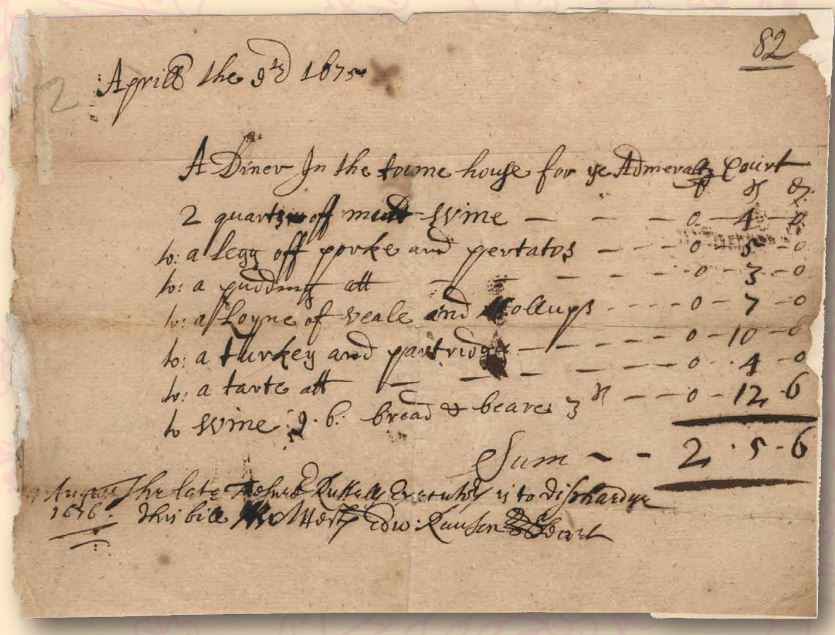
Potatoes were introduced to Massachusetts by English colonists. This bill for dinner for an Admiralty Court is dated April, 9th, 1675. Included are two quarts of wine, “2 legg of porke and pertatoes,” …A Loyne of veale…a Turkey and pertatoes.”
Massachusetts Archives
Popcorn
Archaeologists have uncovered evidence that
native people in Peru prepared popcorn
over 3,000 year ago. According to legend
Wampanoags brought it to Plymouth for
the 1621 feast. That is unlikely since local
varieties of corn were not effective for popping.
Returning the Favor:
Morris was called the “black lawyer” but also the “Irish lawyer” because so many clients were Irish immigrants. He was sympathetic to a young boy harassed by classmates in the Chelsea schools. One of ten Irish students in a class of one hundred, the child’s arm was broken at one point. Starting as an offi ce boy with Morris, Patrick Collins later studied law and became mayor of Boston.
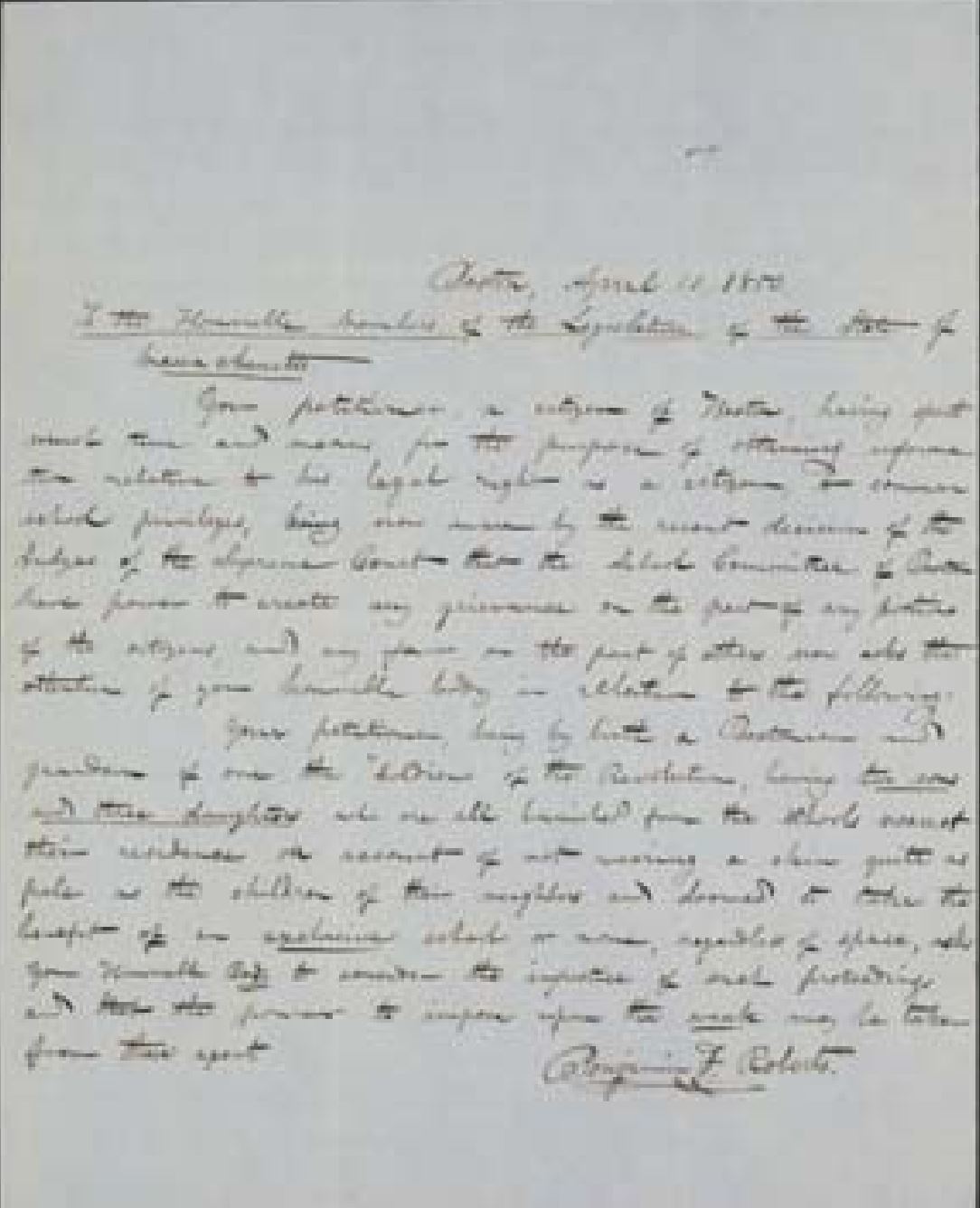
This 1851 petition against segregated schools
This 1851 petition against segregated schools includes the names of socially prominent abolitionists including Wendell Phillips, son of a former mayor, and attorney Ellis Gray Loring, who mentored Robert Morris. Charles Sumner, less prominent at first, later became famous as a Massachusetts Senator. - Massachusetts Archives
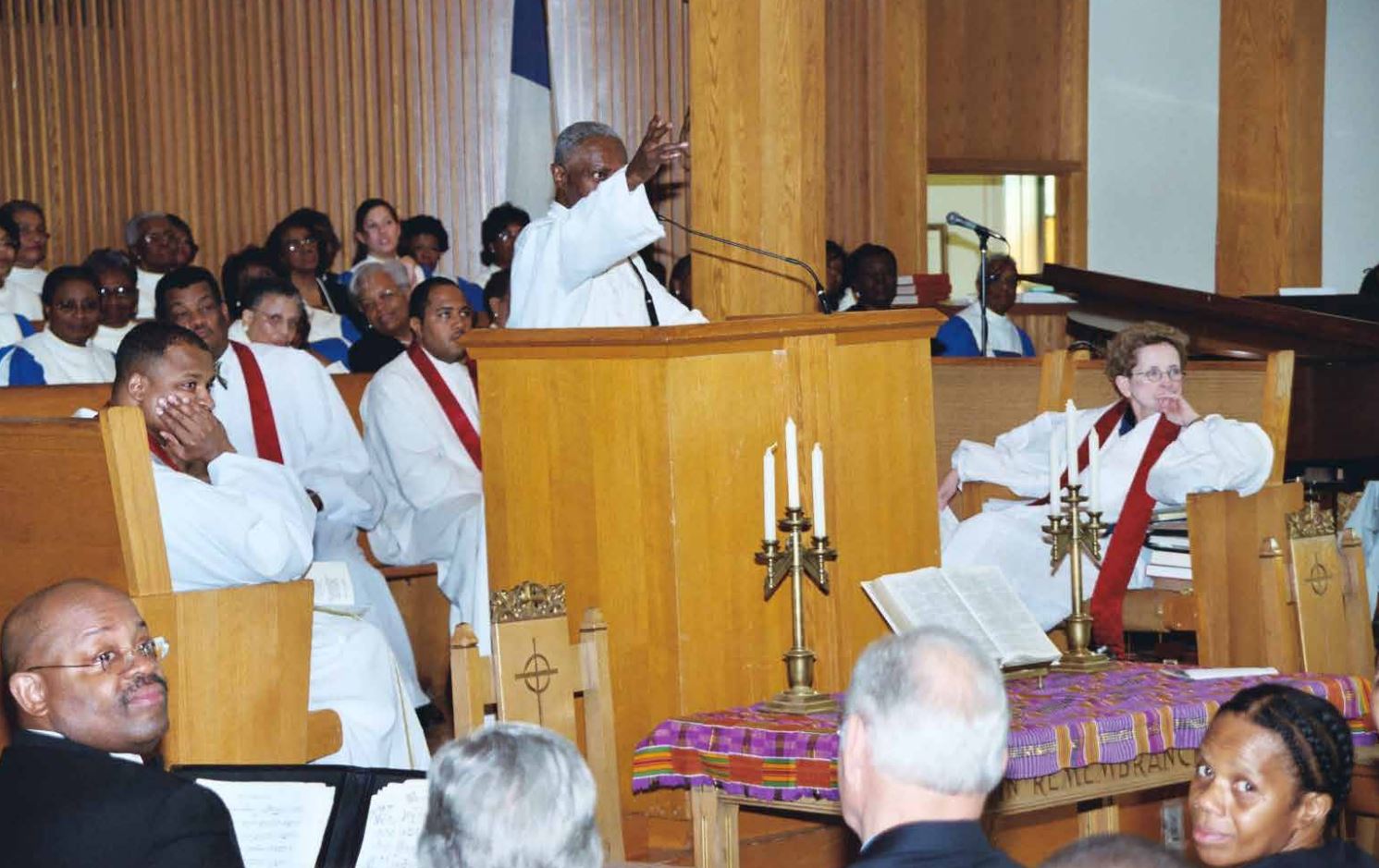
Anthony W. Lanier has been taking photographs in Roxbury for over 20 years. Most of his images are for reference in his drawings. In 2000, Lanier exhibited a series of graphite drawings of people waiting for the bus in the Dudley MBTA bus terminal. A Massachusetts Cultural Council Grant was awarded for the work in 2002. In 2007 the Boston Public Library purchased fifteen of his original graphite drawings for their permanent collection.
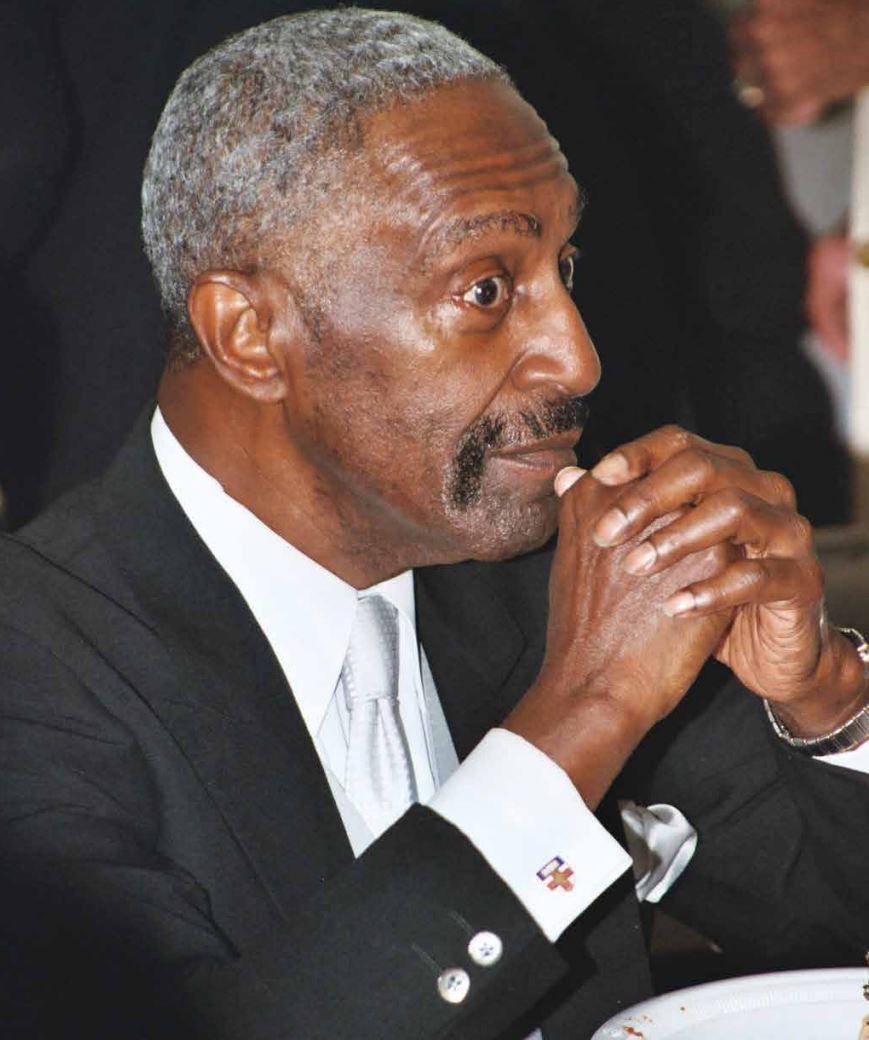
This exhibit is the first display of some of the historic images from
the past two decades taken by the artist. The Commonwealth
Museum is pleased to feature these photos in an exhibit that
celebrates one of the oldest communities in Massachusetts and
highlights its history, diversity, and vitality.
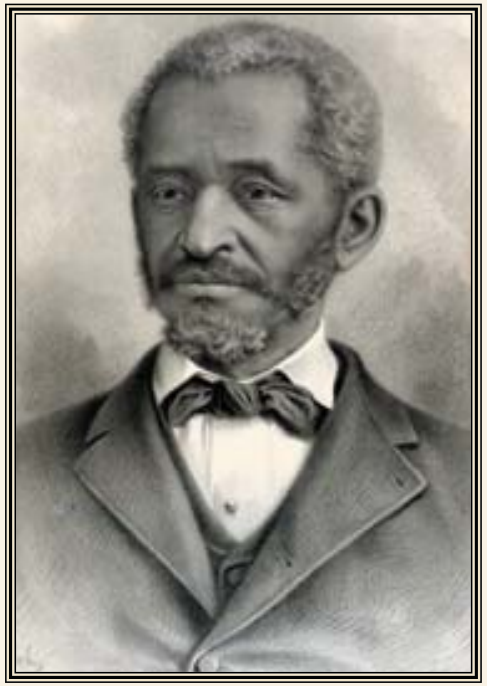
Emergence of Lewis Hayden
Hayden quickly became a leader in resisting the Fugitive Slave Law. Although relatively new to Boston, he had unique qualities: an impressive capacity for growth, a dignity that earned credibility with black and white Bostonians, and rock steady reliability in a crisis. A “man of action” he combined intelligence with physical courage. Some African-Americans called him the “Tavern of Strength.” To children he was “Papa Hayden.”
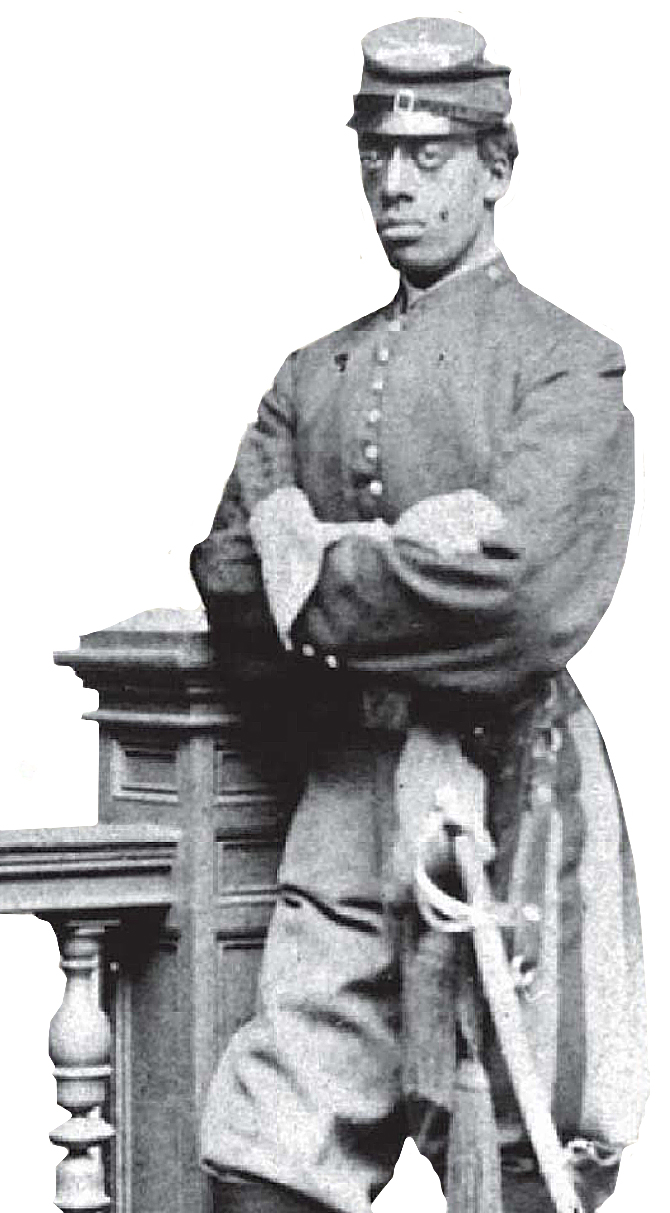
Photograph of Sergeant Charles Douglass, 5th Massachusetts Cavalry
As a soldier in a cavalry regiment, Charles Douglass wore a distinctive uniform. This included a shortened coat, sturdy leather boots, and a heavy saber.
- Courtesy of Moorland-Spingarn Research Center, Howard University Archives
Charles Douglass was the youngest son of famed abolitionist Frederick Douglass. He was said to be the first soldier enlisted in the African-American regiments from Massachusetts. After briefly serving in the 54th Infantry, he was commissioned as a first sergeant in the 5th Cavalry. After his discharge from the Army in 1865, he moved to Washington, D.C., and played for the Mutuals, one of the first African-American baseball clubs. In later life he worked as a clerk in the Pension Office, and died in Washington, D.C., in 1920.
Captions are clear of wrap - Clear both
Benjamin Robert’s daughter Sarah was forced to walk a longer distance to a segregated school. Her maternal grandfather James Easton was a Revolutionary War veteran who tried to integrate his local church. After buying a pew, he found it covered with tar the following week. Benjamin Roberts published a newspaper for a time and ran a printing business. He brought suit to desegregate Boston public schools. Some black parents disagreed, thinking that a segregated school was safer.
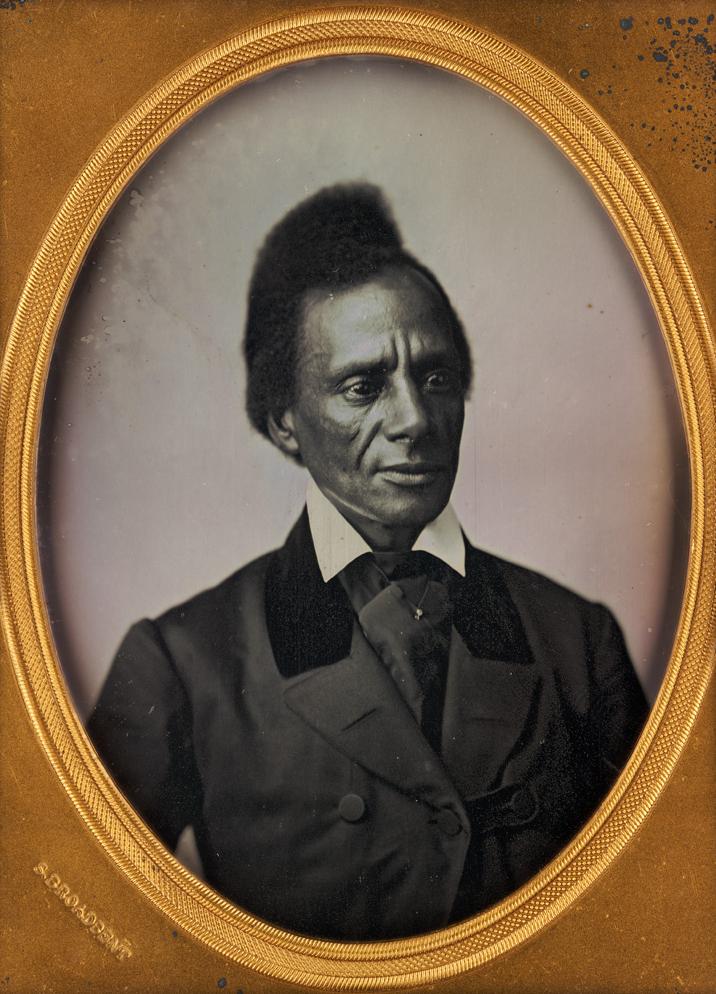
Charles L. Remond

Several black activists were related to the Roberts family, including Charles Lenox Remond of Salem. A dynamic speaker, he may have been the first African-American to testify before a Massachusetts legislative committee (examining railroad discrimination in 1842.)
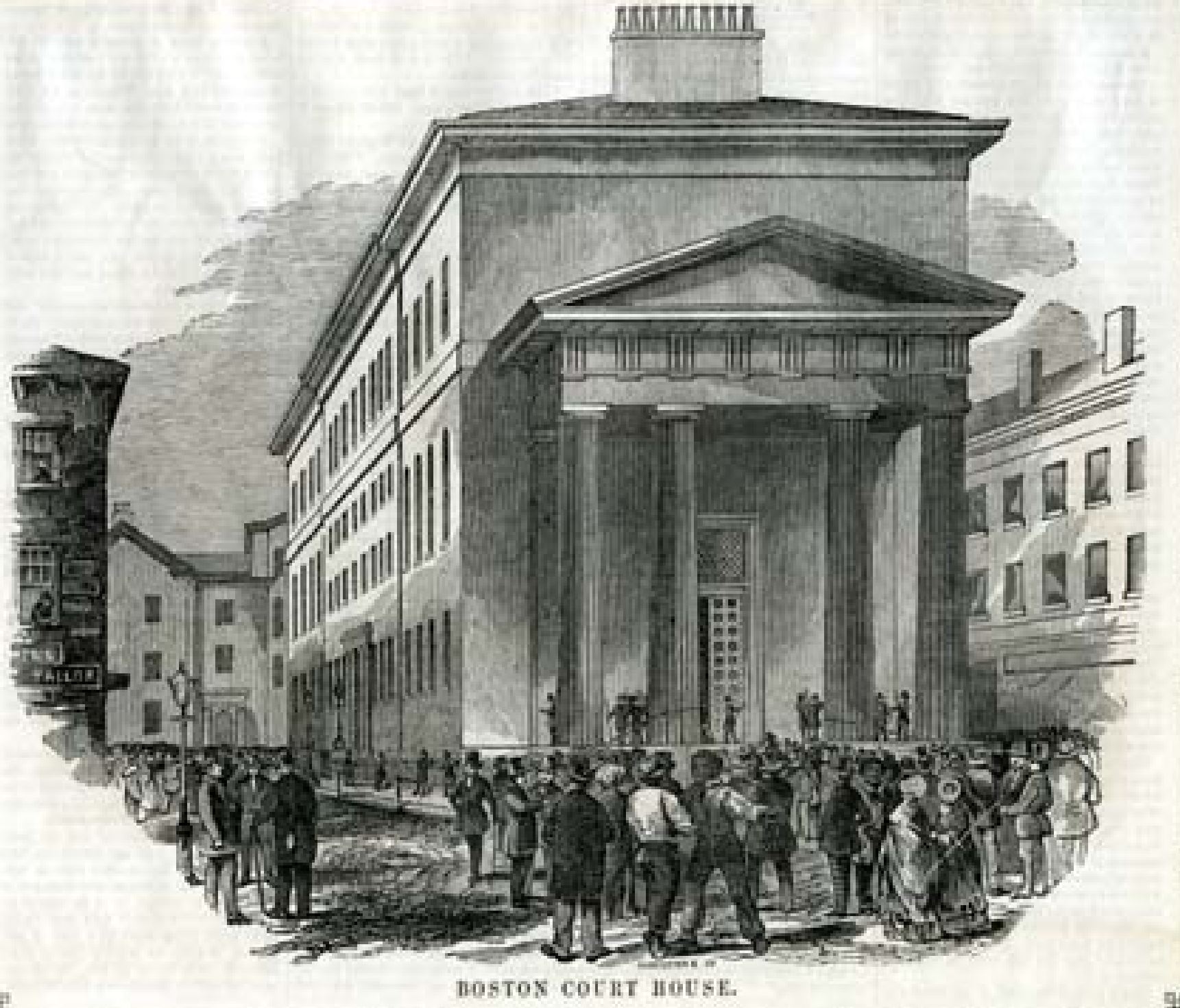
The Abiel Smith School

A wealthy philanthropist, Abiel Smith, had donated money to establish a school for black children. By 1848 it had fallen behind other Boston Public Schools by almost every measure. The Mather School library had nine hundred volumes, the Mayhew School four hundred, while the Smith School had one.
- Massachusetts Archives
Petition against segragation

This 1851 petition against school segregation includes the signer’s addresses. Many, including Belknap Street, Southac Street, and Smith Court are black neighborhoods on the North Slope of Beacon Hill.
- Massachusetts Archives
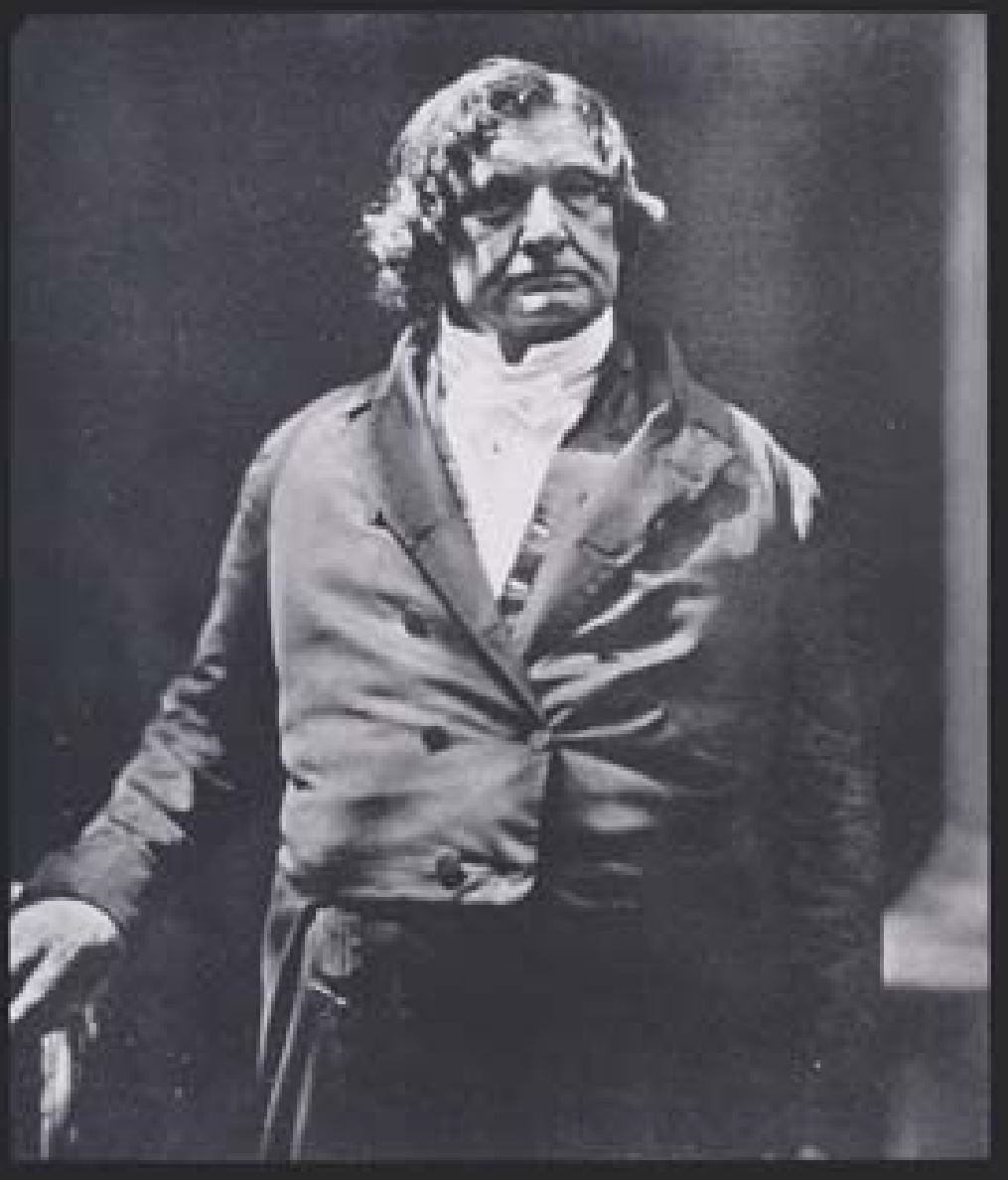
Lemuel Shaw

This boarding house was home to William Cooper Nell (on the North Slope of Beacon Hill.)
- Massachusetts Archives
- Public Domain Review

- Graphics Fairy
- Blandon Campbell
- Massachusetts Archives
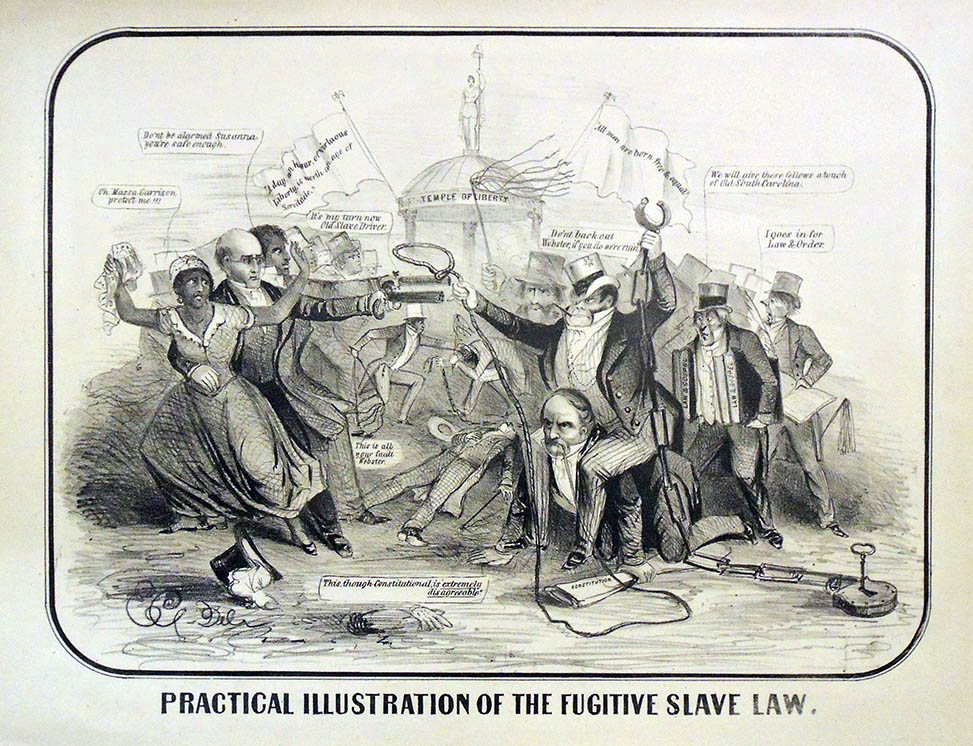
About the Compromise of 1850
The free state of California would balance the slave state of
Texas. The territories of New Mexico and Utah would decide
on slavery for themselves. The slave trade (but not slavery) would
end in the District of Columbia. Under the Fugitive Slave Law
private citizens faced a $1,000 fi ne or six months in prison for
assisting runaways. Fugitives would appear before a federal
commissioner paid $10 for ruling against the slave and $5 for
supporting a claim of freedom.
“One of the most revolting scenes I have ever witnessed took place this morning in the yard of the Leverett Street prison.”
– Baltimore Sun article, 1849
”TEXT ONLY
Massachusetts recruited three African-American regiments during the Civil War, the 54th, 55th, and 5th Cavalry. News that black soldiers could not be offi cers led to divisions within the black community. Some opposed recruitment. “Equality fi rst, guns afterward” was the sentiment voiced by William Wells Brown. Robert Morris agreed and argued against enlistment. William Cooper Nell was discouraged by the ban but thought the historical opportunity should not be missed. Similar concerns arose over the issue of equal pay
- Lexington Public Library
Setting the Stage:
The “Latimer Law” In 1843, escaped slave George Latimer was held under an earlier version of the Fugitive Slave Law. Abolitionists protested with 65,000 petitions weighing 150 pounds and rolled into the State House. In response, the legislature passed a “Personal Freedom Law” prohibiting the holding of escaped slaves in Massachusetts jails. By denying secure facilities it encouraged later rescue attempts.
Latimer petition

Latimer petition, 1843. The “Latimer Law” refl ects the language in this petition. The text and some signature pages remain.
- Massachusetts Archives
Personal liberty

The “Latimer Law” banned the detention of escaped slaves in Massachusetts jails
- Massachusetts Archives
An English Woman on Native
Foods
In 1676, during King Philip’s War, Mary
Rowlandson was held captive by Nipmuc
Indians. She later described their diet in
a situation of extreme deprivation. “The
chief and commonest food was ground nuts.
They eat also nuts and acorns, artichokes,
lilly roots, ground beans and several other
weeds and roots…also bear, venison, beaver,
tortoise, frogs, squirrels, dogs, skunks,
rattlesnakes.” Reluctant at first, she came
to regard some native foods as “savory.”
“For to the hungry soul every
bitter thing is sweet.”
Commemorating the Boston Massacre
In 1858 abolitionists began the annual commemoration of the Boston Massacre to recognize Crispus Attucks, of black and native ancestry, the fi rst to die in the American Revolution. Many activists in the black community submitted petitions for a monument to Attucks. Eventually a monument recognizing all victims was placed on Boston Common. Lewis Hayden played a prominent role in this effort.
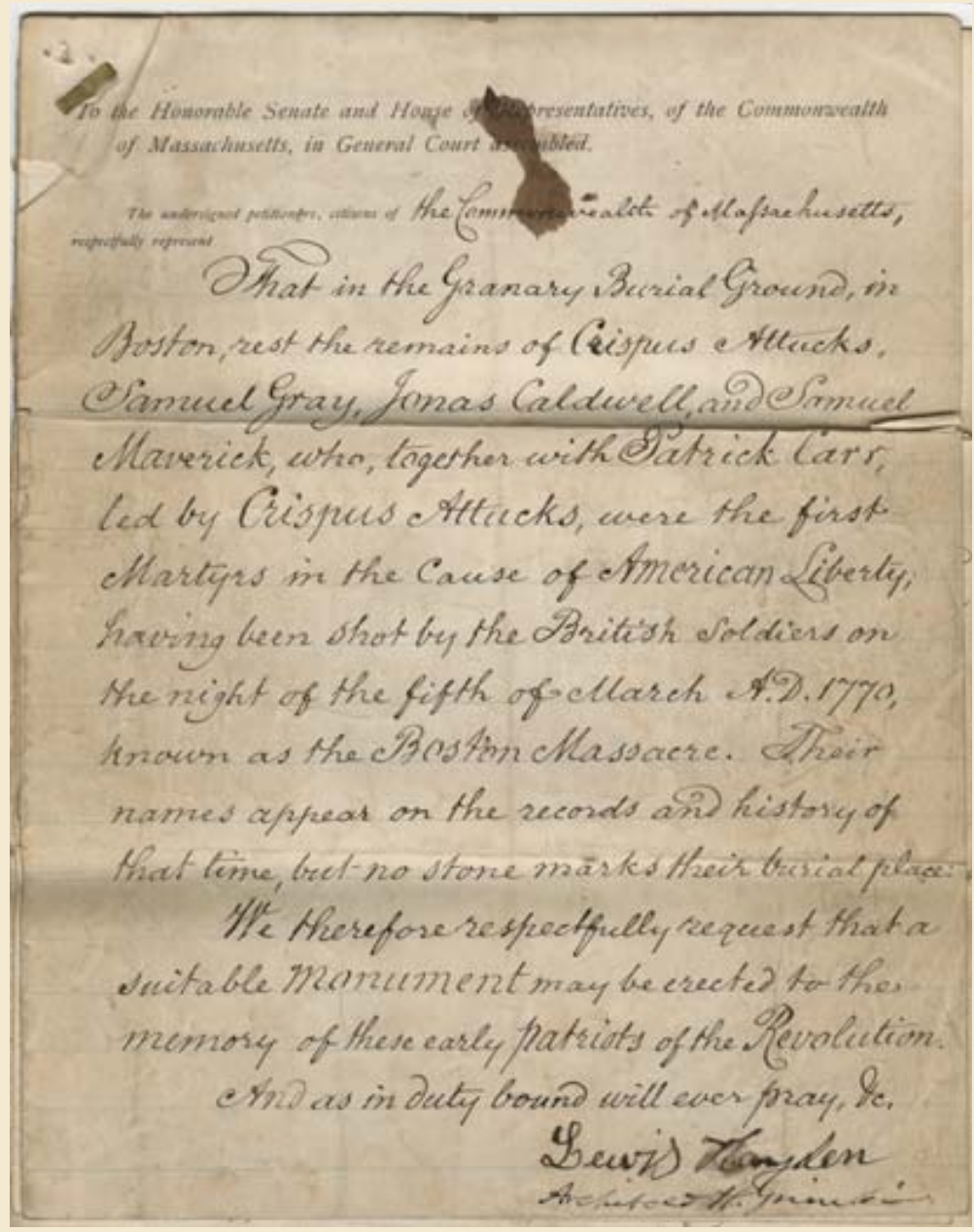
Hayden Petition

Lewis Hayden’ s petition for a monument commemorating Crispus Attucks and the Boston Massacre.
- Massachusetts Archives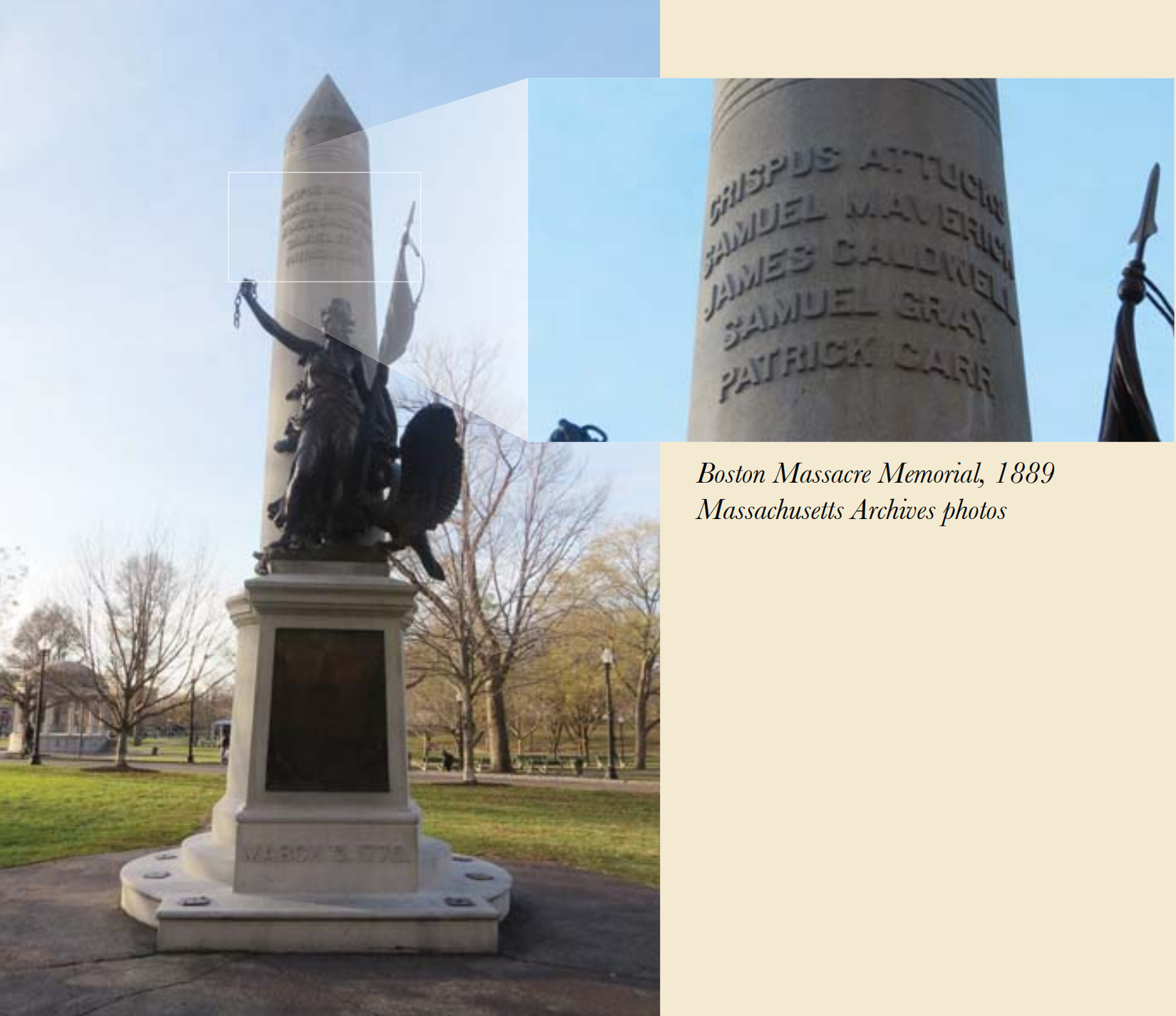
Boston Massacre Memorial

- Massachusetts Archives

Boston MassacreEngraving Plate

Paul Revere’s copper engraving plate for the Boston Massacre image is on display in the Commonwealth Museum’s Treasures Gallery.
- Massachusetts Archives
The Bigelow home

Shadrack Minkins was taken to the Bigelow home in Concord.
- Courtesy Concord Free Public Library
Ann Bigelow in old age.

The benign countenance of abolitionist Ann Bigelow in old age.
- Courtesy of Concord Free Public Library
- Greg Kullberg
Alliance with Massasoit
The small size and vulnerability of the
colony encouraged efforts at an alliance
with Massasoit and his Pokanoket nation (a
Wampanoag community). Their numbers had
been greatly reduced by disease, making them
vulnerable to attack by rival nations like the
Narragansett. Plymouth Colony court records
show a more cautious attitude at first toward
Native people accused of crimes. As more
English settlers arrived punishments became
more severe.
- Massachusetts State Library
Power Play
A friend and advisor of Civil War Governor John Albion Andrew, Lewis Hayden remained active in Republican politics after the war, serving one term in the legislature. Hayden and others wanted a substantial role in party politics including input on the nominee for governor. Most party leaders thought that abolition of slavery was enough. They took African-American support for granted and pushed Hayden and others to the side. The resilient Hayden worked as a messenger in the Secretary of State’s office.
Kentucky Tollhouse
Lewis and Harriet Hayden departed in a carriage on the Maysville Road. Their disguise reportedly included an application of white fl our. On a risky journey thirteen tollhouses separated them from freedom at 5-mile intervals.
- Bullock Photographic Collection, Transylvania University Library
Calvin Fairbank
Calvin Fairbank was sentenced to fifteen years at hard labor for his role in the Hayden’s escape. Lewis raised $650 for his release after four years, ten months, and twenty-four days. Delia Webster received a two-year sentence that was soon commuted. Fairbank wrote a lighthearted account of his time in prison. “My head shaven close, I dressed in stripes and put to sawing stones.”
- University of Kentucky Archives
Speak for Yourself, John
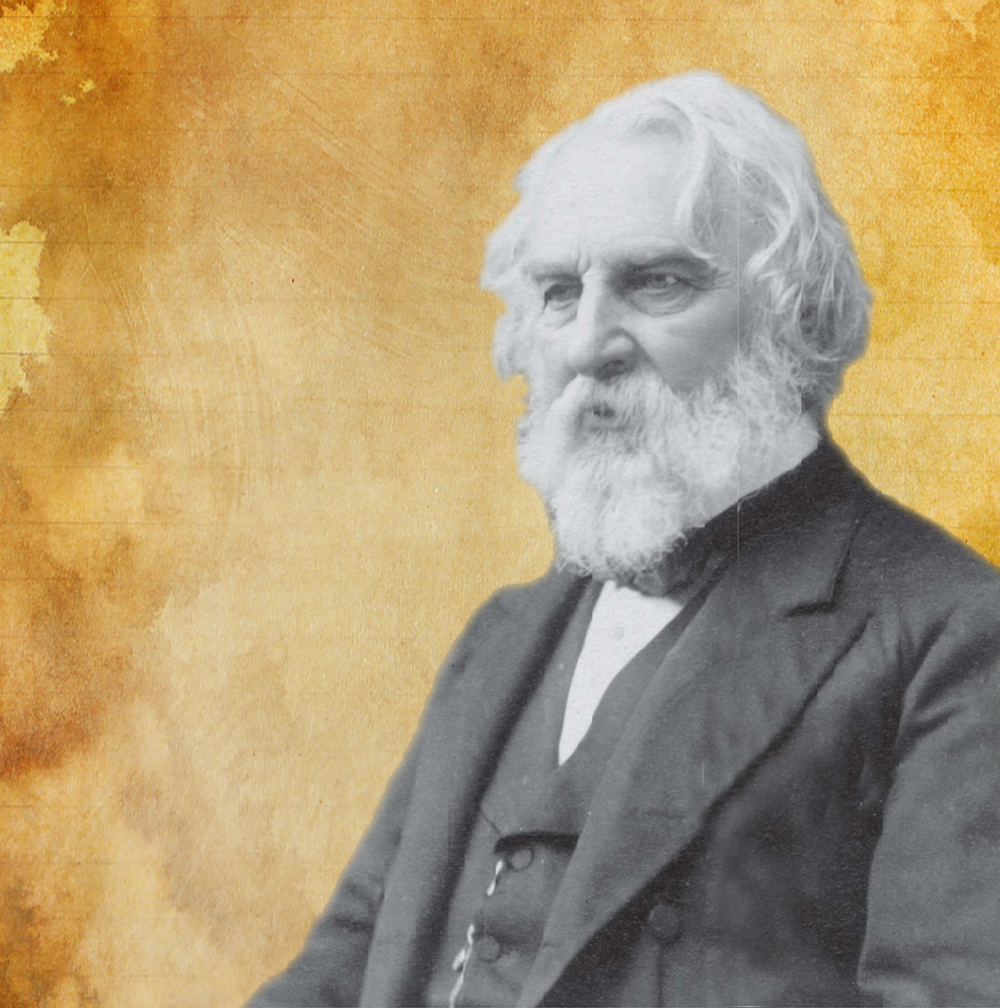
Henry Wadsworth Longfellow, the children’s poet, helped
burnish the Pilgrim’s image. His story of John Alden
proposing to Priscilla Mullins, on
behalf of his bashful friend Myles
Standish, is memorable – as is her reply
– “speak for yourself John.” Longfellow
introduces real historical figures but
not real history. Standish, the colony’s
military leader, was not bashful but
overly aggressive at times, particularly
with Native people.
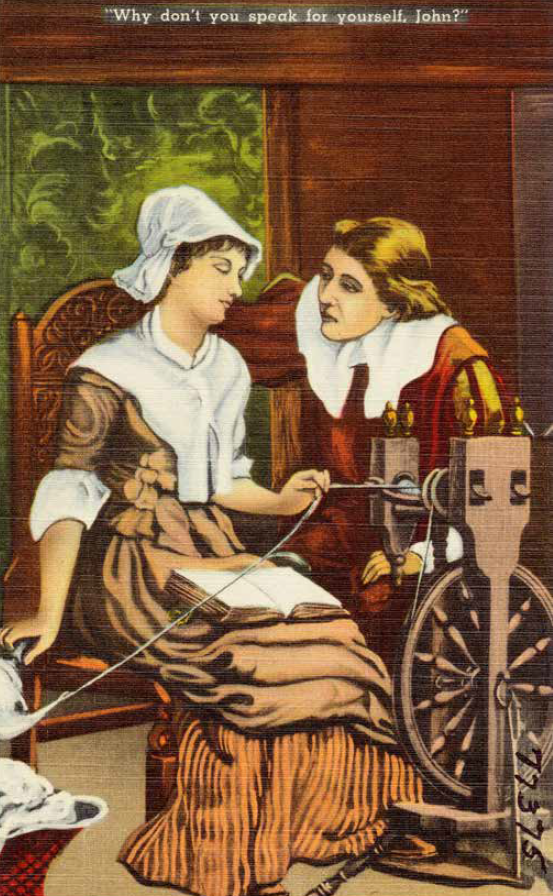
- by Henry Wadsworth Longfellow Tichnor
In his own words
Hayden was born into slavery in Kentucky around 1811. Unlike many who escaped on the Underground Railroad, he did not remain in the shadows. On a visit to Boston Harriet Beecher Stowe interviewed Lewis and other fugitive slaves. His story – in his own words – traces a history of cruel separation from parents and siblings.
The fate of Hayden’s parents
My mother was of mixed blood – white and Indian. She married my father when he was working in a bagging factory
near by. After a while my father’s owner moved off and took my father with him, which broke up the marriage.
A man made proposals of a base nature to {my mother}...She would not consent to live with this man...and he sent her
to prison, and had her fl ogged and punished in various ways, so that at last she began to have crazy turns.
The Hayden children sold by
Kentucky Minister Adam Rankin
When he was going to leave Kentucky for
Pennsylvania, he sold all my brothers and sisters at auction. I stood by and saw them sold.
When I was just going up on the block, he
swapped me off for a pair of carriage
horses...It was commonly reported that my
master had said in the pulpit that there was
no more harm in separating a family of slaves
than a litter of pigs...
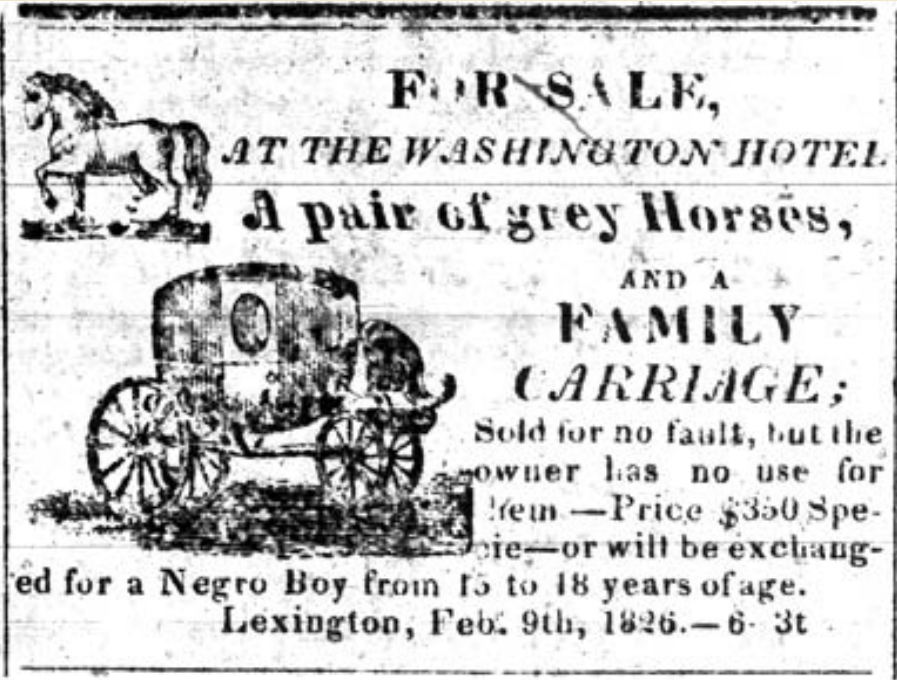
Newspaper ad
This newspaper ad for a carriage and pair of gray horses is possibly related to the sale of Lewis Hayden, February 9, 1826. Courtesy of the Kentucky Room,
- Lexington Public Library
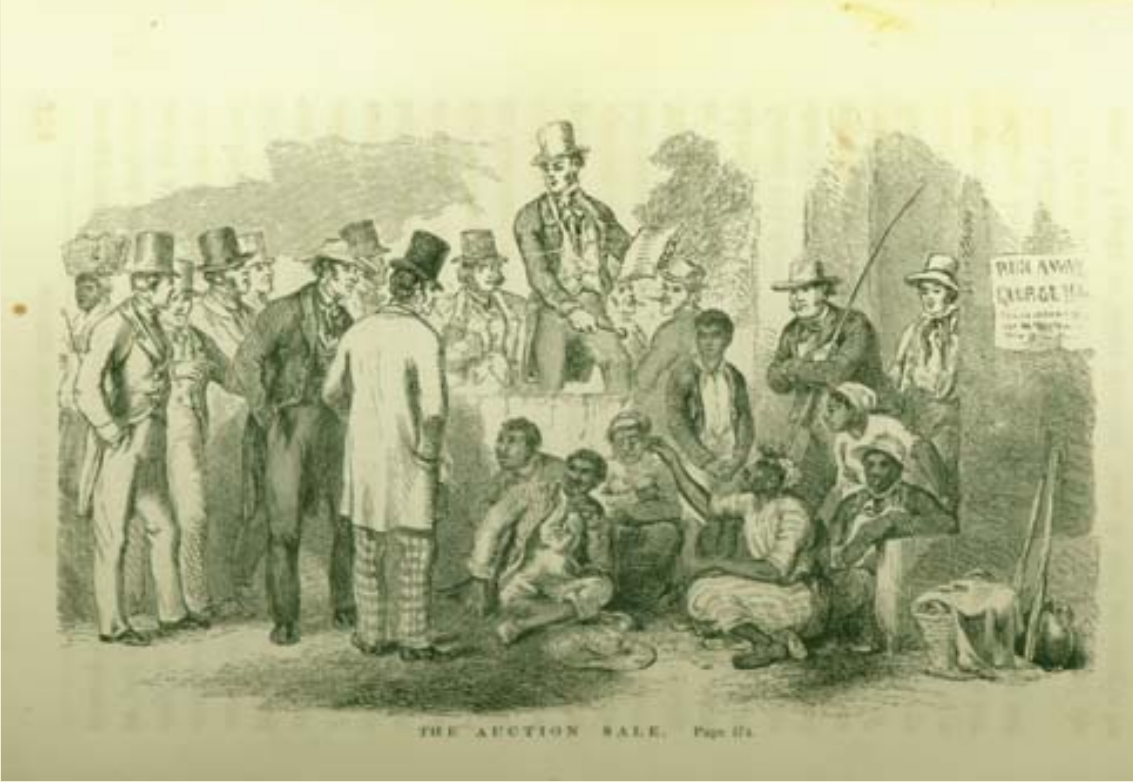
Slave Auction
Illustration of a Kentucky slave auction from the first edition of Uncle Tom’s Cabin
- Newberry Library Digital Collections
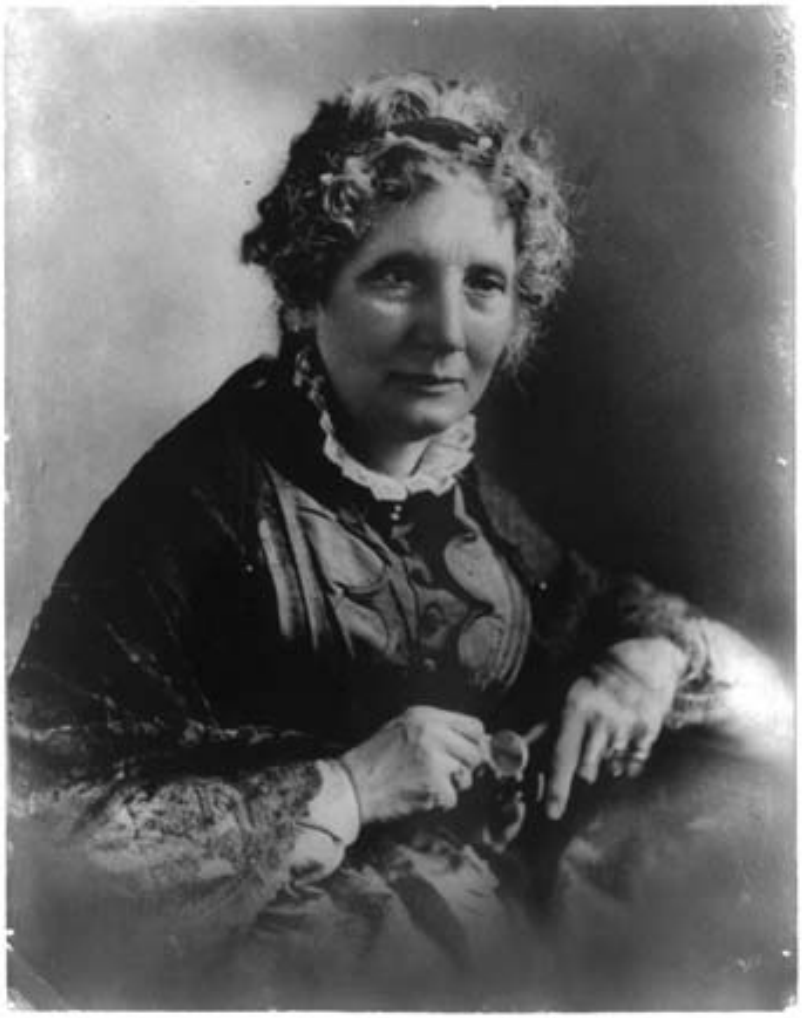
Harriet Beecher Stowe
- Library of Congress
A Key to Uncle Tom’s Cabin
Lewis Hayden died in Boston on Sunday morning April 7, 1889. His passing was front-page news in the New York Times as well as in the Boston Globe, Boston Herald and Boston Evening Transcript.
Leading nineteenth century reformers attended the funeral including Frederick Douglass, and women’s rights champion Lucy Stone. The Governor of Massachusetts, Mayor of Boston, and Secretary of the Commonwealth felt it important to participate.
Hayden’s was a life of real signifi cance — but few people know of him today. A historical marker at his Beacon Hill home tells part of the story: “A Meeting Place of Abolitionists and a Station on the Underground Railroad.”
Hayden is often described as a “man of action.” An escaped slave, he stood at the center of a struggle for dignity and equal rights in nineteenth century Boston. His story remains an inspiration to those who take the time to learn about it.