
Le Grand D'erangement:
Prelude to War
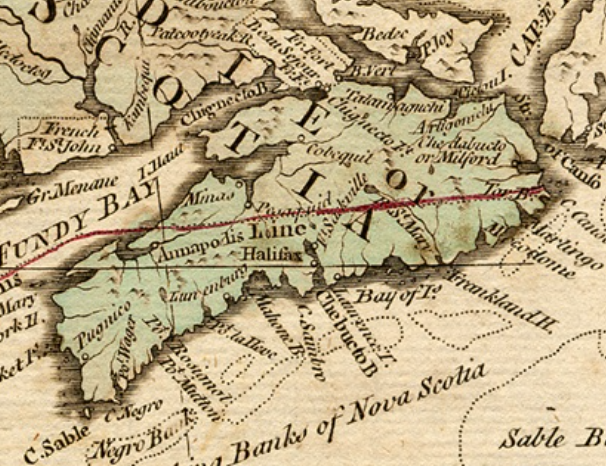
The boundaries of Acadia or Nova Scotia had long been at contest, the presence of the French in supposed British territory increasing the apprehension of many.
Acadians had remained in the colony following the assumption of British control in 1713.Their refusal to take an unqualified oath of allegiance earned them the title “French Neutrals” and the contempt of British authorities. Massachusetts had always taken an interest in the affairs of Nova Scotia and feared that the French presence there threatened its safety, and perhaps that of all the British North American colonies. Governor William Shirley began voicing such an opinion in 1749.
In 1750 he entered into uneasy negotiations with the French when they established Fort Beausejour on the Chignecto Peninsula. These having proved unsuccessful, Shirley began recruiting forces in 1755 to expel the French from Nova Scotia, appointing Colonel John Winslow as second in command. Troops left Boston Harbor in May. By June, they had captured Fort Beausejour.
War loomed ahead.
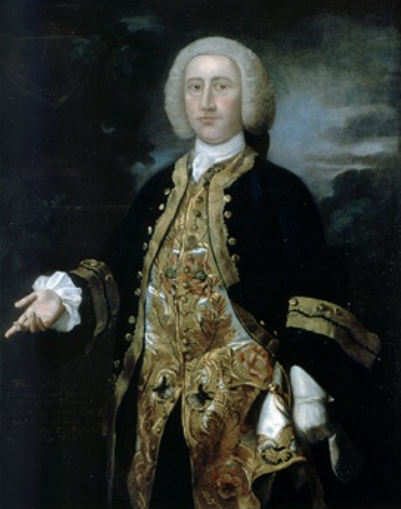
Portrait by Thomas Hudson, c. 1750
Instrumental in the effort to expel the French from Nova Scotia, Shirley is credited by many historians with being one of the architects of the Acadian deportation along with Governor Charles Lawrence of Nova Scotia (1755-1760). Courtesy of the Commonwealth of Massachusetts Art Commission
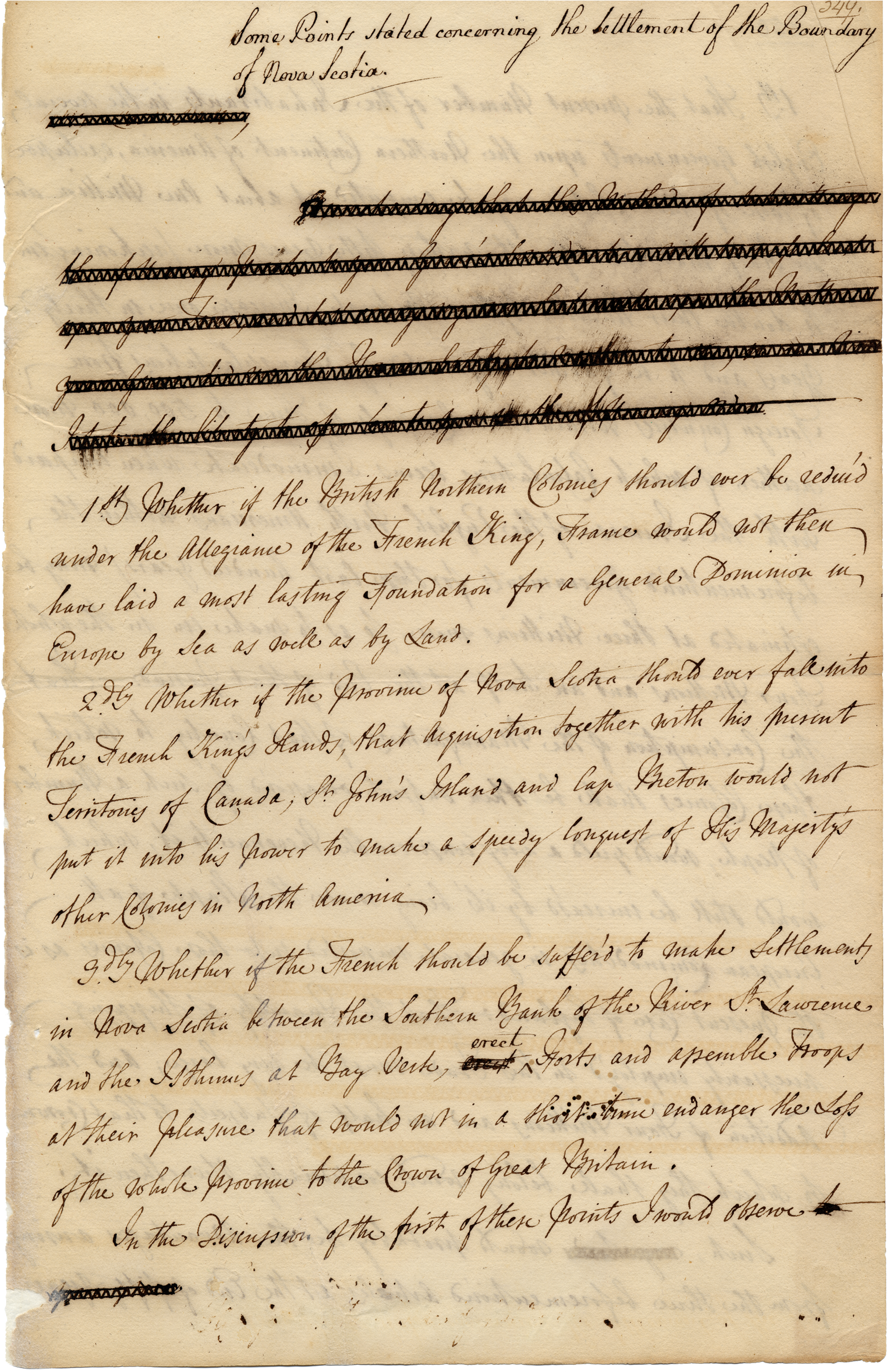
Addressing the legislature, Governor Shirley warned that French encroachments in Nova Scotia threatened the safety of the British colonies and the profitability of New England industry. Massachusetts Archives
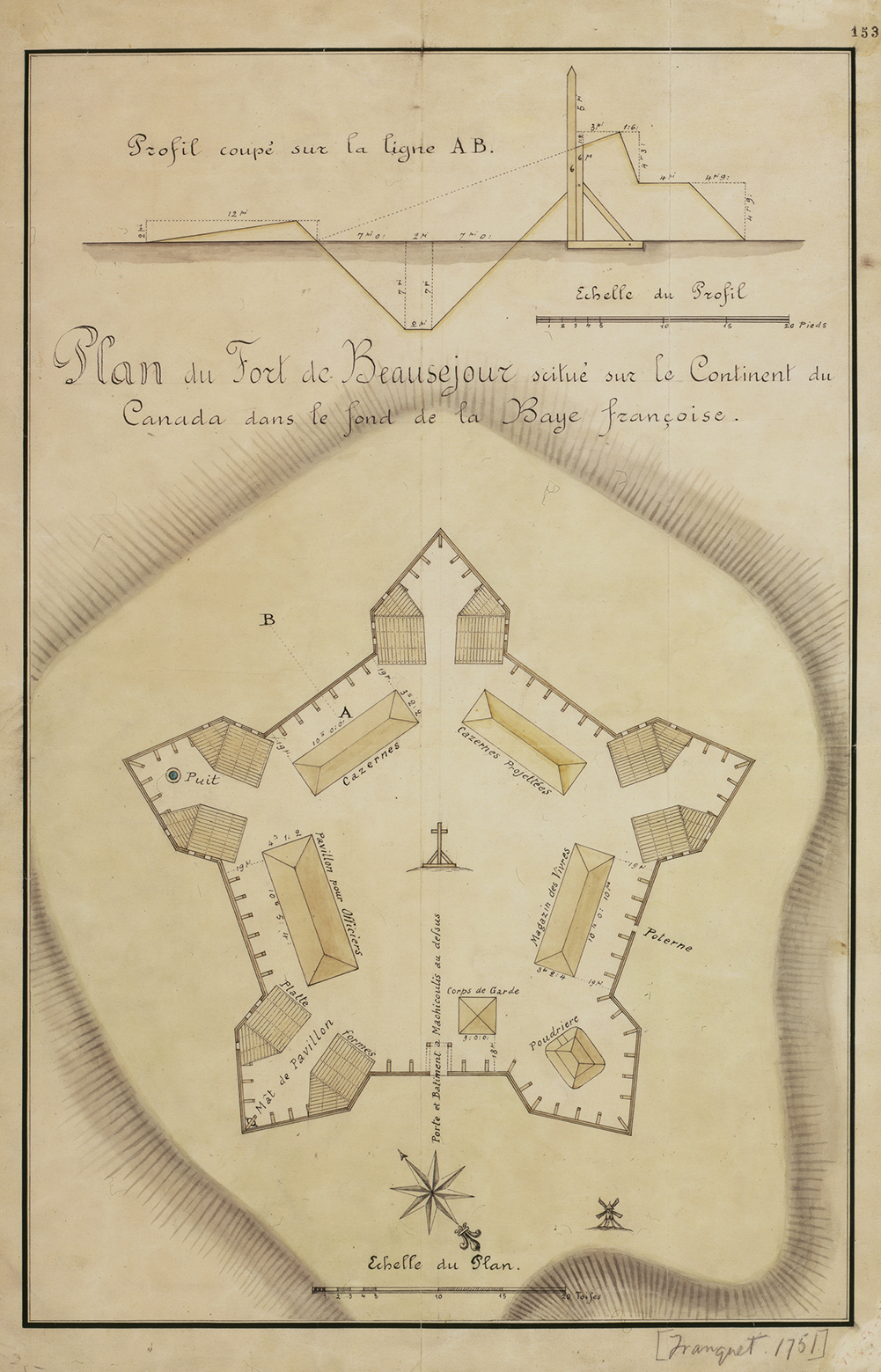
A similar plan, obtained by the British from a French spy, provided detailed specifications needed for the fort’s capture. Courtesy of Library and Archives Canada
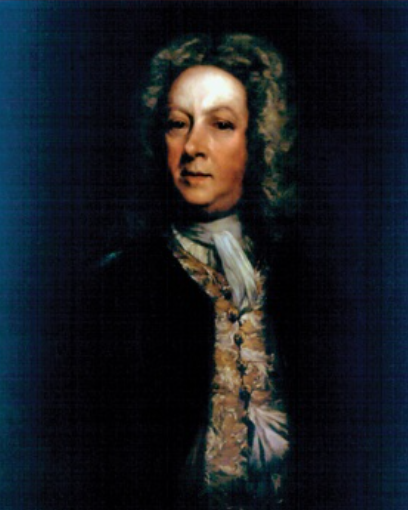
Portrait by Alice Ruggles Sohier, 1930
Phipps served as acting governor during Shirley’s extended absences from the province. During the influx of Acadians into Massachusetts, Phipps often headed the legislature and took part in many of the decisions regarding their disposition. Courtesy of the Commonwealth of Massachusetts Art Commission
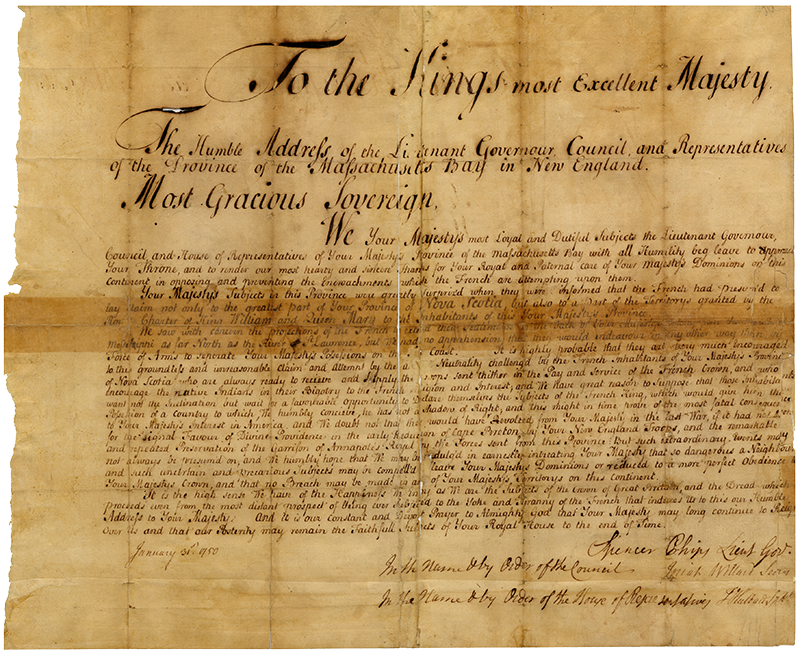
Likely fearing support of French encroachments in Nova Scotia on the part of the Acadians, the Massachusetts legislature headed by Lieutenant Governor Spencer Phipps petitioned the King for their complete removal. Massachusetts Archives